For 9th and 10th graders, there's something more important to build than extracurricular activities: a solid foundation.

Accumulating credentials without direction becomes shaky by 11th grade.
College admissions hinge on Why, not What.

What is the Activity Builder Course (ABC)?

As the stage where the direction of college admissions and my own storyare first formed,

This is a program exclusively for9th and 10th graders that explores students' values, interests, and critical thinking to designthree core extracurricular activities (EC) that only they can undertake.


The foundation of U.S. college admissionsis
Starting from ABC.

Why should you create a 'story' before focusing on credentials for U.S. college admissions?

Many students lack a clear purpose for their activities and have a vague direction.
Their credentials are similar to other students'.
They lack compelling stories to share.

In this state, they will never stand out in the U.S. college admissions process.
American universities value "Who is this student?" and "Why did they make these choices?" above credentials.
The ABC Program is designed to help students answer these questions.
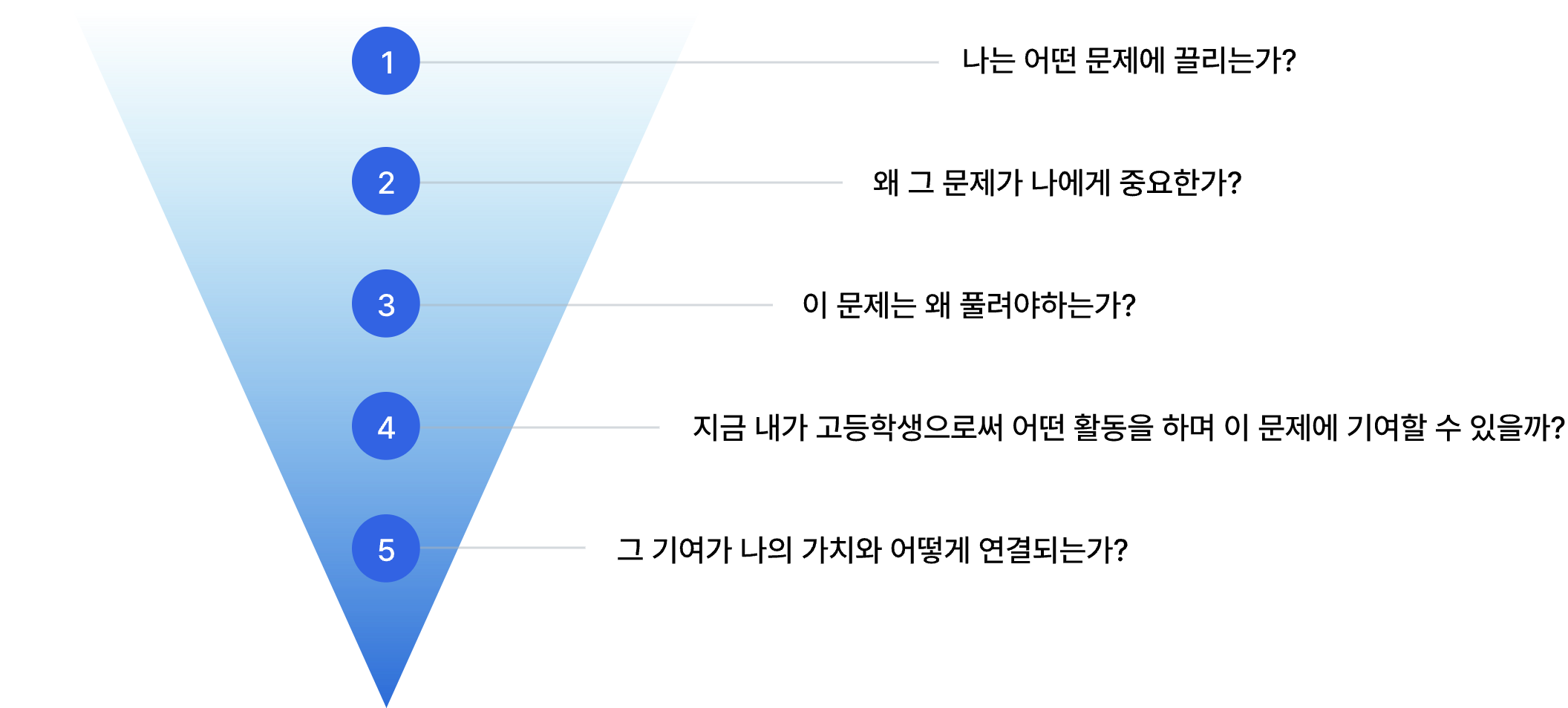
It connects a student's values, problem awareness, and actions into a cohesive narrative.
This program creates the story and core activities that universities remember.

The core criterion U.S. universities look for in students is the ability to answer the question:
It is the thought process that enables answering this question.

This journey becomes my own unique story, irreplaceable by anyone else.


Among thousands of applications, the 'memorable student' is precisely what sets them apart.

Why is exploring social issues important for U.S. college admissions?

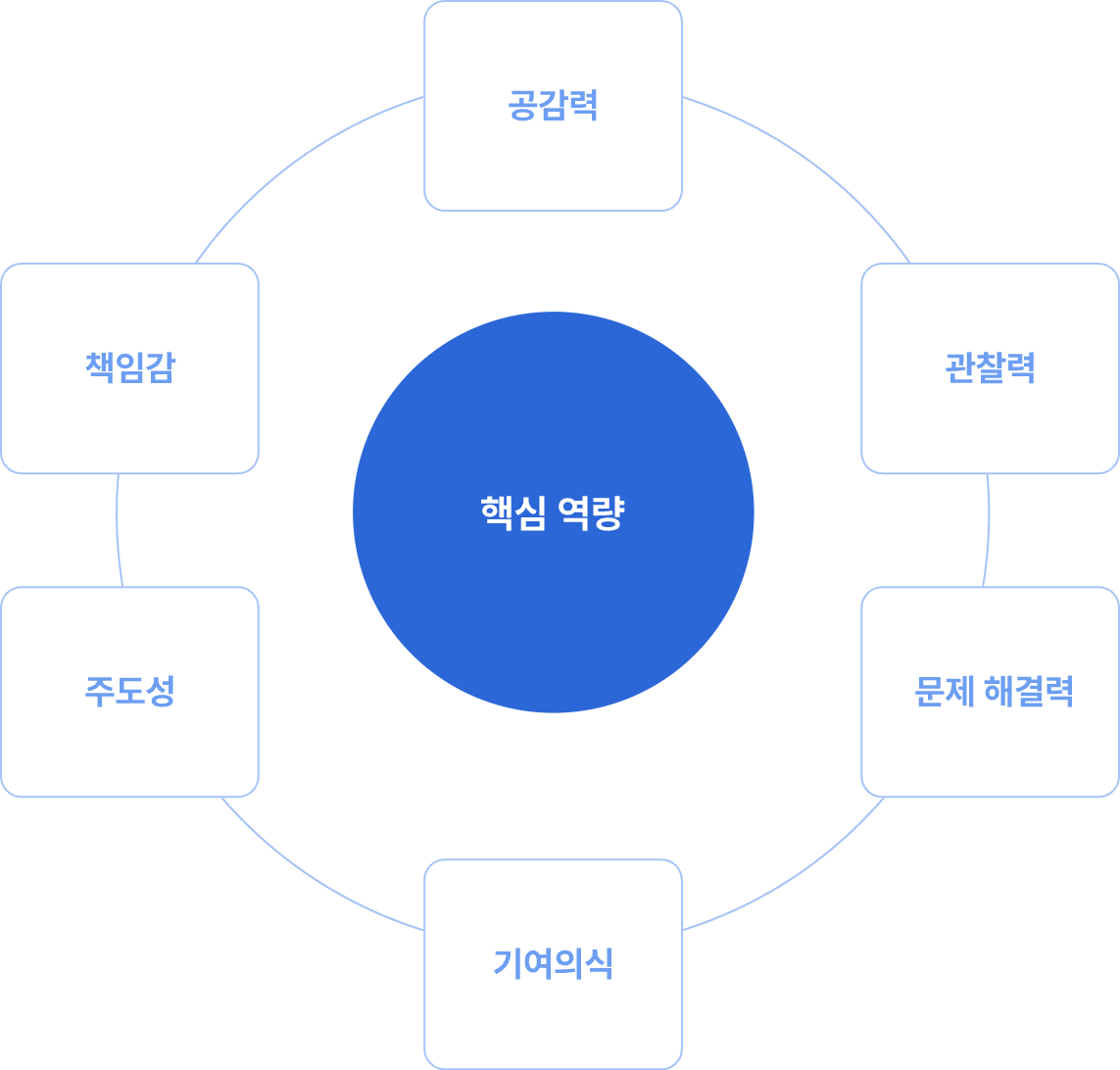
When social issues become the theme of a story, it can demonstrate the core competencies sought by universities at
.


ABC's Five Core Deliverables

1. Designing Your 3 Unique ECs That Are Irreplaceable by Others

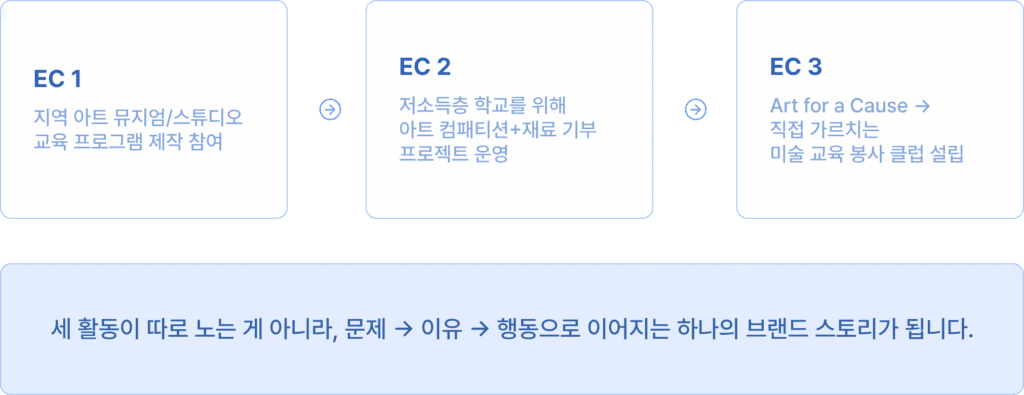
We design three unique extracurricular activities that reflect the student's values, critical thinking, interests, and contributions—activities that others cannot replicate.
These activities are not mere credentials; they become core evidence of the student's identity, serving as the brand's defining proof.

2. Organizing the College Admissions Branding Structure


This structure establishes a clear benchmark for the entire college admissions strategy after 11th grade, including major selection, course selection, and extracurricular direction.

3. Strengthening critical thinking, organization, and expression skills evaluated by universities

Problem exploration → Structuring → Speaking and writing: We provide essential critical thinking training for college entrance exams.
Through online group discussions, students share perspectives, naturally deepening their thinking and expression skills.

4. College Essay Writing Guidance

Using actual college prompts as reference,
I practice writing to hone my skills in how to articulate my brand and e-commerce venture in essays.

5. BY Community Membership

Even after classes end, your growth doesn't stop. Through the BY exclusive community and 1:1 counseling requests, you can steadily expand and sustain your
EC and projects.
BY isn't a one-time class; it provides a continuous environment for your long-term growth.

The problems and solutions explored by students will provide a foundation for participating in external pitching competitions or conferences.

After ABC, how will things change?

Before

Feeling overwhelmed about what activities to do

Music, sports, volunteering, clubs—jumping from one thing to another without a core focus

You will follow the recommended activities for friends, school, and academies exactly as they are.

Failure to explain the purpose of each activity

Major, personality, and critical awareness are not connected to the EC.

As a result, a common portfolio is completed.


After

Establishing a clear direction based on values, interests, and problem awareness

Derive three core extracurricular activities that only I can do, each embodying a clearpurpose and tangible contribution

• Complete the branding flow where allactivities connect into one cohesive story

•As brandingtakes shape, a natural consolidation of academic direction—major, subjects, awards, etc.

• A unique brand remembered by the university+ securing evidence


Student reviews after attending Brand Youth

Admitted to four U.S. universities from a regular high school

From a simple interest in the environment to identifying specific problems/fields of study

From diverse interests to the issue of South Korea's suicide rate

Program Guide

ABC Builder Course

$2500
  • For 9th–10th graders
  • 14 weeks (1 week of orientation + 12 weeks of main classes + 1 week of presentations)
  • Online Group Classes (3-6 people)
  • Register for both ABC and Mentorship long-term consulting simultaneously to receive a waiver of the ABC fee.

When 1:1 mentorship builds upon the foundation ABC provides,
your activities, major, and essay come together as one cohesive narrative.

※ ABC is included free of charge when registering for the MYCC package.

Frequently Asked Questions (FAQ)

Q1. Do you choose the major for me?

We do not choose your major for you. The most crucial aspect of selecting a major is having a clear reason—one that admissions officers can understand—for "Why this major?" At ABC, we help students identify that very "Why" by organizing what problems they are drawn to and what they wish to explore, allowing their major direction to emerge naturally.

Q2. If we do group lessons, won't all of my child's ideas be shared?

ABC ideas cannot be copied verbatim because they stem from each student's unique experiences and strengths. What admissions officers value most is precisely this genuine sense of purpose born from real experiences and a realistic action plan. Instead, by sharing ideas and receiving feedback from peers on feasibility and appeal, you can develop them into more robust and compelling activities.

Q3. My child is shy or not good at discussions. Is one-on-one tutoring possible?

ABC does not offer one-on-one lessons. Since the ability to articulate and express one's thoughts is essential across essays, interviews, and extracurriculars in the U.S. college admissions process, ABC is designed as a small-group class to cultivate this skill most effectively. The core learning effect of ABC is the natural expansion of thinking that occurs when students listen to each other's questions and perspectives. Furthermore, rather than forcing participation, our expert instructors guide students step-by-step, ensuring even introverted students can join in without pressure. In fact, students who were previously quiet often show the most significant improvement in organizing and expressing their thoughts through group classes.

Q4. Does it require a lot of time outside of homework and class?

Each class has homework. Since self-reflection is key, more time invested is better, but the homework itself is designed to be completed within about 2 hours. Structure: Class 2 hours + Homework 2 hours + α (personal reflection time)


Q5. How much does it cost?

The cost for all Brand Youth programs (ABC, CAP) is $2,500. These programs offer exceptional value for money, providing a far more efficient way to build the core foundation needed for college admissions consulting. Additionally, when registering for MYCC, the cost of the corresponding Brand Youth program for each grade level is fully waived.


Q6. What specific assistance do you receive regarding EC activities?

At MYCC, we view extracurricular activities not as "activities to pad resumes," but as tools to realize a student's brand (their unique story, values, and sense of purpose). Therefore, rather than simply listing or reviewing existing extracurriculars, students themselves plan activities aligned with the brand created through the ABC program. If they have already undertaken activities, they develop them further to fit their brand. 

At ABC, we define the branding directionbased on the student's interests and experiences. We then design the process: social issue identification → research → solution (project direction). Finally, we create the EC/project idea and a step-by-step implementation plan (roadmap, schedule, deliverables) to bring this vision to life.

Q7. Do we absolutely have to do the consulting together?


ABC is an educational program thatteaches methods and frameworks to enable students to handle their own branding. Students who learn this and implement it themselves can have a meaningful high school experience without consulting.

However, consulting is an option where students receive personalized advice/guidancefrom a dedicated assistant (expert) tostrategically refine their work and increase their chances of college admission. Naturally, this yields different results compared to working independently.

In other words, ABC = cultivates the power to build things yourself, while consulting = provides one-on-one support to strategically elevate your work to a higher level of completion.

Q8. What is the difference between EC support through ABC and EC support through the Mentorship Package?

ABC is a class wherestudents learn how to determine the "overall direction (theme/interests)" and "sequence (what to do first, then next)" for their future extracurricular activities. This process is crucial because extracurriculars are far more sustainable when they stem from a direction the child has personally understood and chosen, rather than a plan someone else made for them. It also ensures the story flows naturallyon the application later. Therefore, ABC helps students cultivate the abilityto think for themselves about "why they want to do this," and to organize a realistic EC roadmapbased on their interests and strengths.

The mentorship package builds upon the direction established at ABC. Your assigned mentor will work with you one-on-one to organize your ideas, expand your options through brainstorming when you feel stuck, and transform your plan into concrete action steps (when/how/what). Most importantly, mentorship isn't justa one-time thing —it involves continuous monitoring and follow-up to ensureyour activities lead to tangible results and outcomes.


To summarize, ABC is "the process of learning how to plan for yourself," while mentorship focuses more on "the process of running alongside someone one-on-one to help them see that plan through to the end."

The golden period for college admissions is grades 9-10.

If the narrative, core EC, and direction are established during this period,
the outcomes after 11th grade will be completely different.


Start with the ABCs of U.S. college admissions.